Denied IVF Because of Your BMI? Your Fertility Story May Not Be Over
Is this your situation - when it took so much to get here?
Being told that you cannot have another round of IVF because of your BMI can feel like far more than a decision about treatment.
It can feel like being told that this is the end.
Perhaps you have already spent years trying to conceive. You may have endured investigations, pregnancy loss, fertility treatment and months in which your life has revolved around appointments, results and waiting. Then, just as you prepare yourself to try again, another barrier is placed in front of you.
Lose weight.
Meet the criteria.
Come back when your body fits the rules.
If this has happened to you, you may be left wondering whether there is anything else you can do. You may feel angry with your body, abandoned by the fertility system and frightened that the opportunity to become a mother is slipping further away.
But a decision about your eligibility for IVF is not the same as a complete assessment of your fertility.
It does not mean that every possible question has been asked.
It does not mean that every area of your health and wellbeing has been explored.
And it does not automatically mean that your story is over.
When IVF feels like your only remaining hope
By the time many women reach IVF, they have already been through far more than other people realise.
You may have been told that IVF offers your best chance of pregnancy. You may have organised your finances, your work and your entire life around treatment. You may have tried to prepare yourself emotionally for another cycle, even while carrying everything that happened during the previous one.
When treatment is then withdrawn because of your BMI, it can feel as though the only available route to your baby has disappeared.
You are not simply dealing with disappointment. You may also be carrying:
The grief of the baby you already love but have not yet been able to bring home
The pressure to become pregnant and remain pregnant
The emotional impact of previous miscarriage or pregnancy loss
The trauma of difficult fertility treatment
The loneliness of feeling like a number within a system
The fear that your partner is hurting too
The belief that your body has failed you
The worry that time is running out
You may also have started to believe that your BMI explains everything, even if no one has helped you understand the wider picture.
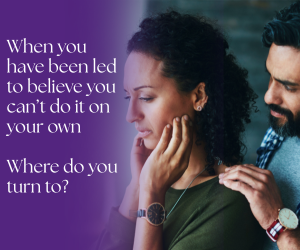
This is where Lowri found herself.
“I feel as though I need something more”
Lowri had been trying to conceive for eight years when she first contacted me.
She had experienced a molar pregnancy, miscarriages and two unsuccessful IVF cycles. In her first cycle she had not responded as hoped, then her second had resulted in overstimulation.
She was preparing herself for a third attempt when the clinic told her that treatment would not continue unless she lost weight. Despite the medications being a big factor in her weight gain!
Lowri had already endured years of trying, hoping, grieving and beginning again. Her husband, Terry, had also been told that his sperm was not enough in number (quantity), some of the shapes were 'wrong' (morphology) and they weren't moving at the 'desired' pace (motility).
IVF had been presented as the route they needed. Now, even that route appeared to have been taken away.
When Lowri found my website while looking for fertility acupuncture, she wrote:
“I’m not really sure what I need. I just feel like I need something more than what the clinic offers, if that makes any sense.”
Perhaps you recognise that feeling.
You may not know precisely what kind of support you need. You simply know that the answers you have received do not feel complete.
You are more than your BMI, diagnosis or fertility history
A BMI threshold can determine whether a clinic will offer or fund a particular treatment. It cannot, on its own, tell the complete story of your fertility.
Neither can a single hormone result, semen analysis, diagnosis or previous failed cycle.
These pieces of information may be important, but you are not one result or one measurement. Fertility is influenced by multiple interacting factors, and your emotional wellbeing matters alongside your physical health.
This does not mean searching endlessly for something you have done wrong. It does not mean blaming your body or promising that changing one thing will lead to pregnancy.
It means being willing to ask a fuller set of questions.
What has already been investigated?
What has been assumed?
What might have been overlooked?
Do you understand your menstrual cycle and whether ovulation is taking place?
Have your nutritional needs and wider health been considered?
Have both partners been properly supported?
What has eight years of trying to conceive done to your emotional wellbeing, your relationship and your ability to trust your body?
Most importantly, what do you need now?
Lowri did not need another person to tell her that she was failing. She needed somewhere she could be seen as a whole woman rather than a BMI, a diagnosis or an unsuccessful clinical outcome.

Creating a different kind of fertility support
When Lowri and I began working together, there was no promise that she would become pregnant. However, there was a belief that she could.
That distinction matters.
Believing that pregnancy may still be possible is not the same as guaranteeing that it will happen. No ethical practitioner can promise a baby. But neither should a woman be made to feel that a BMI threshold, diagnosis or unsuccessful treatment cycle has already decided the ending of her story.
We began from a place of possibility. Not false hope, but a willingness to look beyond what Lowri had been told, explore the questions that had not yet been asked and support her as a whole woman rather than treating her as a body that had failed.
What we could do was create a place in which Lowri could begin to understand what she had experienced and consider what meaningful support looked like for her.
For seven months, she kept showing up.
Sometimes she arrived with curiosity. Sometimes with sadness, frustration or grief. Sometimes she did not have the words to explain how she felt.
We did not ignore the desire for a baby, but neither did we allow that desire to reduce her to a project that needed to be fixed.
Our work considered her wider fertility picture while also supporting the woman who had become lost beneath eight years of appointments, treatment cycles, pregnancy loss and uncertainty.
We explored her emotional resilience, nervous system, sense of agency and relationship with her body. We made room for the experiences she had been expected to carry quietly. We helped her recognise that a clinical decision did not determine her worth and that she still had choices about what happened next.
Gradually, Lowri began to reconnect with herself.
That was valuable regardless of what her eventual fertility outcome might be.
Then something happened that Lowri had stopped expecting
Lowri became pregnant without further IVF treatment. 👊
Her pregnancy does not prove that every woman who is denied IVF because of her BMI will conceive spontaneously. It does not mean IVF was unnecessary, that weight never matters or that emotional support causes pregnancy.
Her story means something more honest and, I believe, more hopeful.
It shows that the information you have been given may not always represent the whole of what is possible.
A declined treatment cycle is a decision about access to that treatment. It is not a verdict on you as a woman. It is not proof that your body is incapable of pregnancy, and it does not mean that you must stop asking questions or seeking support.
Lowri’s fertility history was complex. Her previous experiences were real, as were the difficulties identified for both her and Terry. Yet the future was not as settled as it had appeared when they were told that they were essentially out of options.
Her story continued.
Yours may continue too, although it may not unfold in exactly the same way.
Pregnancy after infertility can bring a new kind of fear
The positive pregnancy test was not the uncomplicated happy ending people might imagine.
Lowri discovered she was pregnant one day after her period was due. After pregnancy loss, unsuccessful treatment and eight years of uncertainty, those two lines did not immediately make her feel safe.
They opened another period of waiting.
Like many women in the UK, Lowri would not routinely see a midwife until several weeks into her pregnancy. When she contacted her GP practice, she was given the community midwives’ telephone number and told not to call until she was eight weeks pregnant.
There was no recognition of what it had taken to reach that moment.
No one asked how she was coping.
No one seemed to understand that pregnancy after infertility and loss can involve joy, disbelief and intense fear at the same time.
Lowri later described her first trimester as horrendous. She had private scans at seven and nine weeks, which offered some reassurance, but she still felt emotionally unsupported during those early weeks.
She said:
“That was the worst part of the pregnancy. Who do you talk to? Who listens? Who understands what it’s taken to even get here?”
This is something we do not discuss enough.
A positive pregnancy test does not erase the years that came before it. Women who become pregnant following infertility or loss may struggle to trust that the pregnancy will continue. They may analyse every sensation, fear going to the toilet, worry before every scan or feel unable to imagine bringing their baby home.
You may even feel guilty for not enjoying the pregnancy you wanted so desperately.
None of this means that you are ungrateful. It means that you have been through something significant and deserve support that recognises it.
You are the person who has kept going
Lowri’s story is not here to ask you to compare yourself with her.
It is not here to suggest that if she became pregnant, you should be able to do the same.
It is here to remind you that you are already doing something extraordinarily difficult.
You are the one who has attended the appointments.
You are the one who has coped with the results, the procedures, the waiting and the decisions.
You are the one who has continued looking for answers when the answers you were given did not feel sufficient.
You are the one who gets to decide what happens next.
That might mean preparing for another fertility treatment cycle. It might mean seeking a second opinion, exploring your wider health, taking time to recover emotionally or considering another route to parenthood.
It might also mean that you do not know yet.
You do not have to make every decision today.
What might still be possible for you?
Hope is not the promise that everything will happen exactly as you want it to.
Hope is knowing that one decision, diagnosis or number does not get to define your entire future.
If you have been denied IVF because of your BMI, you deserve more than a set of instructions to lose weight and return later. You deserve clear information about the decision, compassionate care and the opportunity to understand your wider fertility picture.
You also deserve support that does not shame you, blame you or make your emotional wellbeing dependent upon a pregnancy result.
There may still be questions to ask.
There may still be areas of your health that deserve greater attention.
There may still be options you have not fully explored.
There may still be a way forward that you cannot yet see.
Lowri could not see the ending of her story when she sent that first message. She only knew that she needed something more.
Sometimes that is where a different chapter begins.
Your story deserves to be heard
f parts of Lowri’s experience feel familiar, you do not have to arrive with all the answers.
You may simply know that you need somewhere to talk through what has happened, understand what may have been overlooked and decide what your next step could be.
My role is not to promise you a baby or tell you that there is one perfect route you must follow. It is to bring together fertility knowledge, emotional wellbeing and personalised support so that you can understand your options and move forward with greater clarity.
You are not a BMI.
You are not a failed cycle.
You are not a statistic.
And you have not failed because the fertility system has reached the limit of what it is currently prepared to offer you.
Your story matters.
And it may not be over.
Would you like to explore what comes next?
If you have been left with unanswered questions following unsuccessful fertility treatment, pregnancy loss or a decision that you no longer meet the criteria for IVF, you are welcome to contact me.
We can begin by looking at where you are now, what you have already experienced and what you need from your next step.
A place to be heard, to ask the questions that may not yet have been asked and to explore what may still be possible.
Click on the photo above to access your focus call
Warm Wishes
Sam